
How crypto card settlement actually works
A crypto card looks simple from the outside: the balance is in USDT, the coffee costs three euros, the card works. The interesting part is the two seconds in between, and who is exposed to what during them.
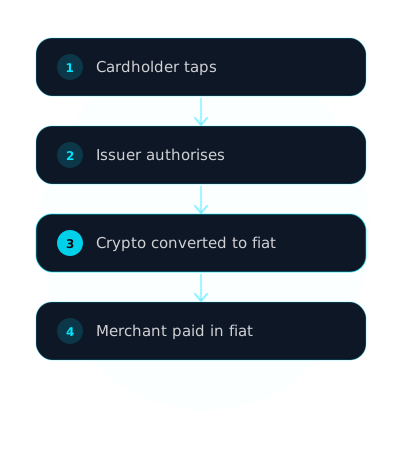
The merchant never sees crypto
Start with the thing that confuses people most. A merchant accepting a crypto-funded card is not accepting cryptocurrency. They see an ordinary Visa transaction, they are paid in fiat through the normal scheme settlement cycle, and their terminal, acquirer and reconciliation process are unchanged.
All of the crypto mechanics sit on the issuing side, upstream of the merchant. This is precisely why crypto cards work: they piggyback on an acceptance network that already exists in every shop in a hundred countries, rather than asking merchants to adopt anything new.
The sequence
- 1The tap
The cardholder presents the card. The terminal builds an authorisation request with the amount, currency, merchant identifier and merchant category code, and sends it to the acquirer.
- 2Routing to the issuer
The acquirer routes the request through the scheme network. The BIN tells the network which issuer to send it to. This is where the programme enters the picture.
- 3Issuer decisioning
The issuing processor checks the card is active, the amount is within limits, the merchant category is permitted, and the funding balance covers the transaction in the transaction currency. Fraud and monitoring rules run here too, in single-digit milliseconds.
- 4Valuation and conversion
The cardholder's crypto balance is valued against the transaction amount. In most consumer programmes the conversion to fiat is executed at this point, which fixes the fiat value at the moment of the tap.
- 5Approve or decline
The decision returns through the network to the terminal. The cardholder sees an approval. Elapsed time is typically well under two seconds, which is the constraint every design decision above is built around.
- 6Clearing
Later, usually the same or next day, the merchant submits the transaction for clearing. The final amount can differ from the authorisation, notably for tips, fuel and hotels.
- 7Settlement
The scheme settles between the issuing and acquiring sides in the settlement currency. The merchant is paid in fiat by their acquirer, net of their own fees, on their normal cycle.
Where FX actually happens
There can be two conversions in a single transaction, and conflating them is the most common source of confusion in programme design.
| Conversion | What it is | Who sets the rate |
|---|---|---|
| Crypto to fiat | The cardholder's digital asset balance converted to a fiat amount to fund the transaction. | The programme, via its liquidity and on-ramp arrangements |
| Fiat to fiat | Where the transaction currency differs from the programme's settlement currency, for example a euro purchase on a dollar-denominated programme. | The card scheme, plus any programme markup disclosed to the cardholder |
The risk window
Between authorisation and settlement there is a gap, usually a day or two, occasionally longer. If the programme converted at authorisation, the funds are already in fiat and nobody carries asset price risk across the gap. If the programme deferred conversion and is still holding the cardholder's crypto, then somebody is exposed to whatever the asset does overnight.
Neither design is wrong, but the exposure has to be deliberate, priced, and documented in the programme rules. The failure mode is a programme that never decided, and discovers its position during a volatile week.
Pre-authorisations and adjustments
Some merchant categories authorise an estimate rather than a final amount. A fuel pump may hold a fixed sum before you have finished filling; a hotel may authorise an estimated stay plus incidentals. The final clearing amount adjusts to reality, and the difference is released.
For a crypto-funded card this means a temporary hold against a balance that the cardholder can see. Explaining that behaviour clearly in the app prevents a large share of support tickets, because the alternative is a customer watching a balance move for reasons nobody told them about.
Frequently asked questions
Does the merchant receive cryptocurrency?+
No. The merchant is paid in fiat through the normal card scheme settlement process, exactly as with any other card. The crypto-to-fiat conversion happens on the issuing side, before settlement reaches the merchant, and is invisible to them.
When does the crypto actually get converted?+
Design varies. Some programmes convert at authorisation, locking the fiat value at the moment of the tap. Others hold crypto and convert at settlement. Converting at authorisation removes price risk between authorisation and settlement, which is why most consumer programmes do it.
Who carries the price risk between authorisation and settlement?+
Whoever holds the crypto during that window. If conversion happens at authorisation, the programme operator carries no asset price risk in the gap, because it is already in fiat. If conversion is deferred, someone is exposed to the move, and the programme design must say explicitly who.
Why do card authorisations sometimes hold more than the purchase amount?+
Certain merchant categories, notably fuel and hotels, submit pre-authorisations for an estimated amount before the final total is known. The final settlement adjusts to the real figure. This is standard card behaviour and is not specific to crypto funding.
Settlement, handled
Zen Card operates authorisation, conversion, scheme settlement and local-currency FX as part of the managed platform.